
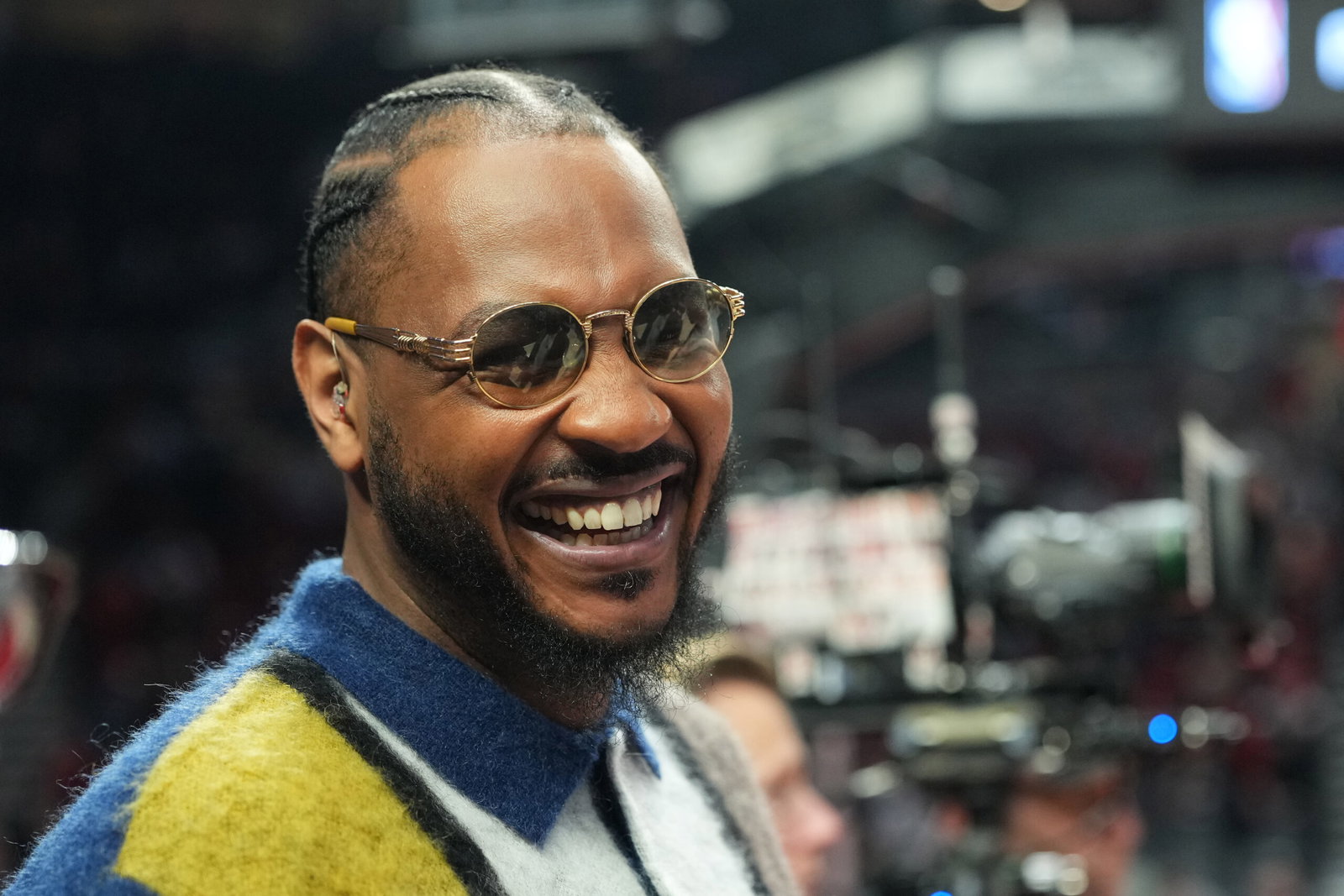
Feb 24, 2026; Portland, Oregon, USA; Former NBA player Carmelo Anthony looks on during the first half between the Portland Trail Blazers and the Minnesota Timberwolves at Moda Center. Mandatory Credit: Soobum Im-Imagn Images
Feb 24, 2026; Portland, Oregon, USA; Former NBA player Carmelo Anthony looks on during the first half between the Portland Trail Blazers and the Minnesota Timberwolves at Moda Center. Mandatory Credit: Soobum Im-Imagn Images
Carmelo Anthony opens up a question about what happens to millions of dollars in reality. Most fans see the headline numbers and assume a player is set for life, but the actual pay tells another side of the story.
During an episode of the 7 PM in Brooklyn podcast, Anthony stated, "That's $100 million, but it's not really $100 million over a five-year span." His point was not that superstars are struggling to buy groceries or pay rent.
Instead, Anthony wanted people to realize that the contract figures announced by media outlets represent gross income rather than actual take-home. He wanted to clear up the confusion about how professional athlete compensation functions.
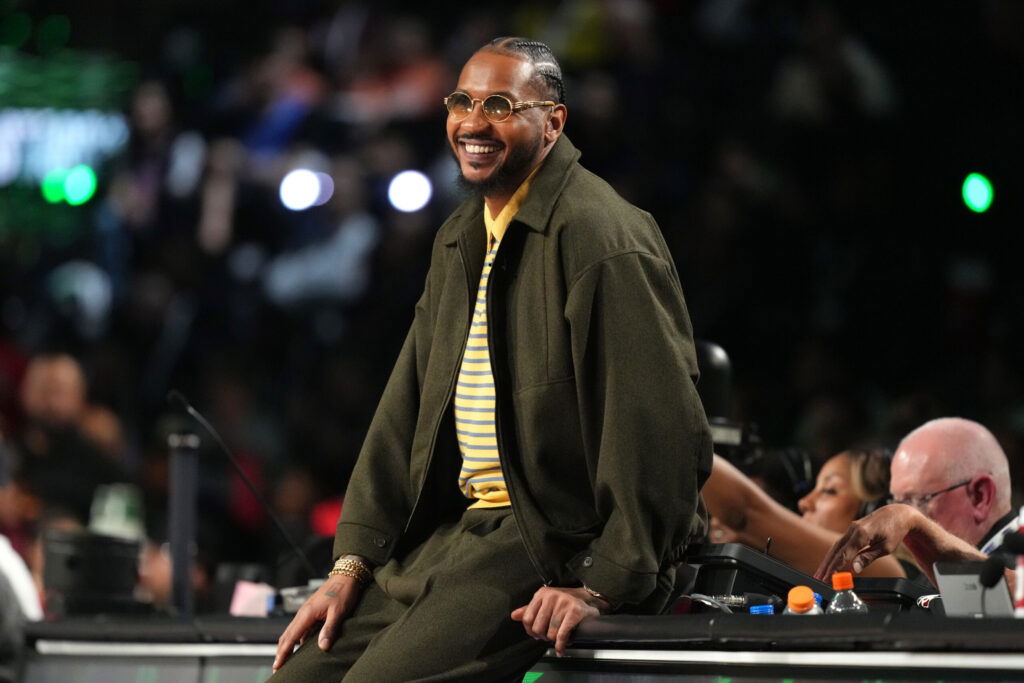
Feb 13, 2026; Inglewood, California, USA; Team Melo honorary coach Carmelo Anthony looks on during an NBA All Star Rising Stars championship game at Intuit Dome. Mandatory Credit: Kirby Lee-Imagn Images
Feb 13, 2026; Inglewood, California, USA; Team Melo honorary coach Carmelo Anthony looks on during an NBA All Star Rising Stars championship game at Intuit Dome. Mandatory Credit: Kirby Lee-Imagn Images
Anthony explained the cycle by saying, "You're talking half your check gone to taxes. Then you gotta live, the house, take care of your mom, your agency fee, all of this stuff happening…" A clip of the conversation was highlighted on X by user @AllFactsHoops.
High-earning athletes face the top federal tax rate of 37%, plus state and local income taxes. On top of that, they pay a unique "jock tax" in every single city and state where they play away games.
When you add standard NBA agent fees, which can take up to 4% of a contract, plus the essential costs of housing and supporting a family, a $20 million annual salary gets cut in half.
Anthony noted that the psychological impact of this cycle is what catches players off guard. He noted, "And that drastic change of lifestyle messes you up mentally. That's the grey area that gets a lot of athletes.”
Professional basketball careers last an average of just under five years, and this means the high-earning window closes fast. When the multi-million dollar checks stop coming, athletes have to transition into budgeting for standard daily expenses.
Anthony used his 19-year NBA experience to defend the message and provide much-needed context.
He made it clear that the discussion is not about looking for sympathy, but rather about teaching younger players how to prepare for the future.
How Carmelo Anthony and Other Stars Expanded Their Financial Wealth
A career for any athlete is unpredictable, and relying only on a team contract can create future problems for them.
For instance, Anthony co-founded a venture capital firm, Melo7 Tech Partners, which invested in brands like Lyft, SeatGeek, and the sports media platform Overtime.
Today, he has expanded his business into media production through Creative 7 and his podcast network.
Kobe Bryant built a venture capital portfolio and made millions through an investment in BodyArmor. LeBron James co-founded the SpringHill Company and took ownership stakes in Blaze Pizza.
Magic Johnson and Shaquille O'Neal also built corporate empires through restaurants and real estate franchises.
All of these athletes knew very well that a player's salary is just a source to fund business opportunities.
Share your thoughts on how leagues should educate young players about managing their contracts.
Read more at Air Jordan Chronicles!
Written by

Utsav Sinha
Edited by

Kaamna Dwivedi